
For most young players in British American football, the dream of making it to the NFL seems impossibly far away. For Scott McCready, that dream started at Hanworth Air Park with the Heathrow Jets Under-14s — and took him all the way to a Super Bowl ring with the New England Patriots.
In this exclusive Britball History interview, Scott shares his story — from his first taste of American football as a child, to his unforgettable days at Wembley, to standing on the sideline in New Orleans as the Patriots beat the St. Louis Rams in Super Bowl XXXVI.
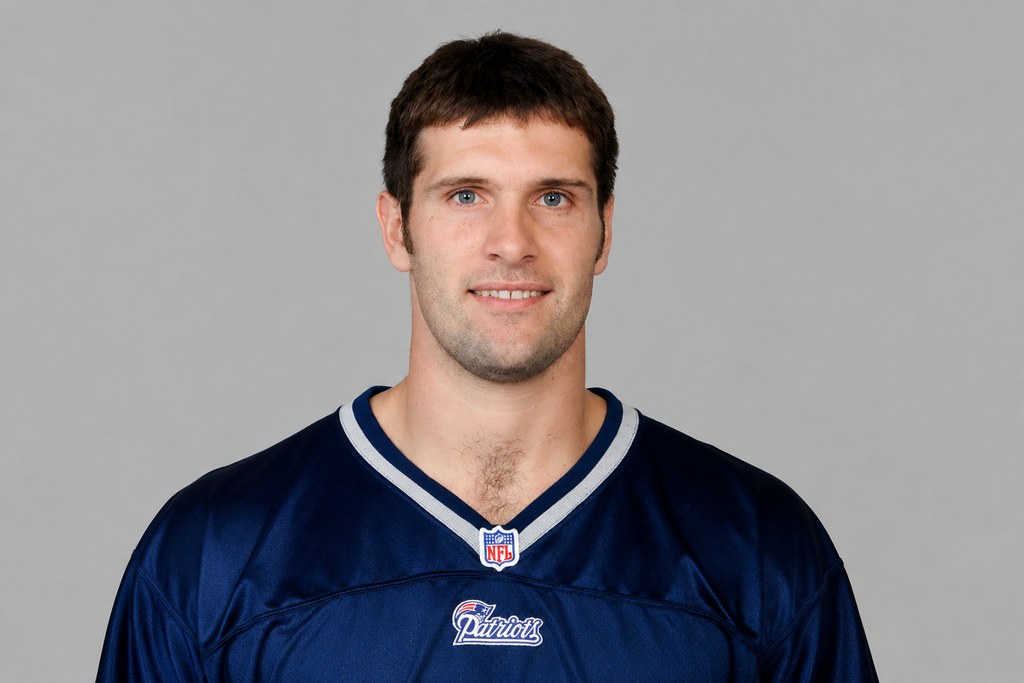
Early days in British American football
How did you first discover American football, and what led you to join the Heathrow Jets under-14s?
My dad was a fighter pilot in the RAF and in the early ’80s he did an exchange with the USAF to fly F-15s in Panama City, Florida. So my mum, my dad, my brother and I moved there in around 1982 or ’83 — I can’t remember the exact year to be honest. We went to the local school and made friends with the other kids, and football was a big part of the culture.
I remember deciding to start supporting the Washington Redskins when we were there, so I’m assuming it was the year they played in the Super Bowl in ’83. My mum and dad separated while we were there, so my brother and I moved back to the UK after less than a year — maybe about a year, I’m not 100% sure. My dad stayed in the States and, once out of the Air Force, became an airline pilot for Delta Airlines. We’d speak to him once a week and see him over the holidays, which meant spending the entire summer in the U.S. most years.
The first reason I really got into football was simply because I thought all the stuff the players wore was cool. The idea of having my own helmet and shoulder pads was about the most exciting thing I could think of. We’d be in the U.S. in the summer, when pre-season was going on, and again around Christmas time, when the NFL playoffs were starting and all the college bowl games were happening. I got my first ball as a present from my dad when I was about nine, and from that point on I wanted to play in the NFL one day.
I can’t remember exactly how we found out about the Jets, but my mum and stepdad would drive us out to Hanworth Air Park on Sundays for our first practices. Like most kids, the first position I wanted to play was quarterback, but I quickly realised it wasn’t really for me. I think I chose to play cornerback because of Darrell Green, who was the NFL’s fastest man at the time. I took to it fairly naturally and quickly figured out I could bait QBs into throwing my way, then jump the ball for an interception — I used to love playing that game.
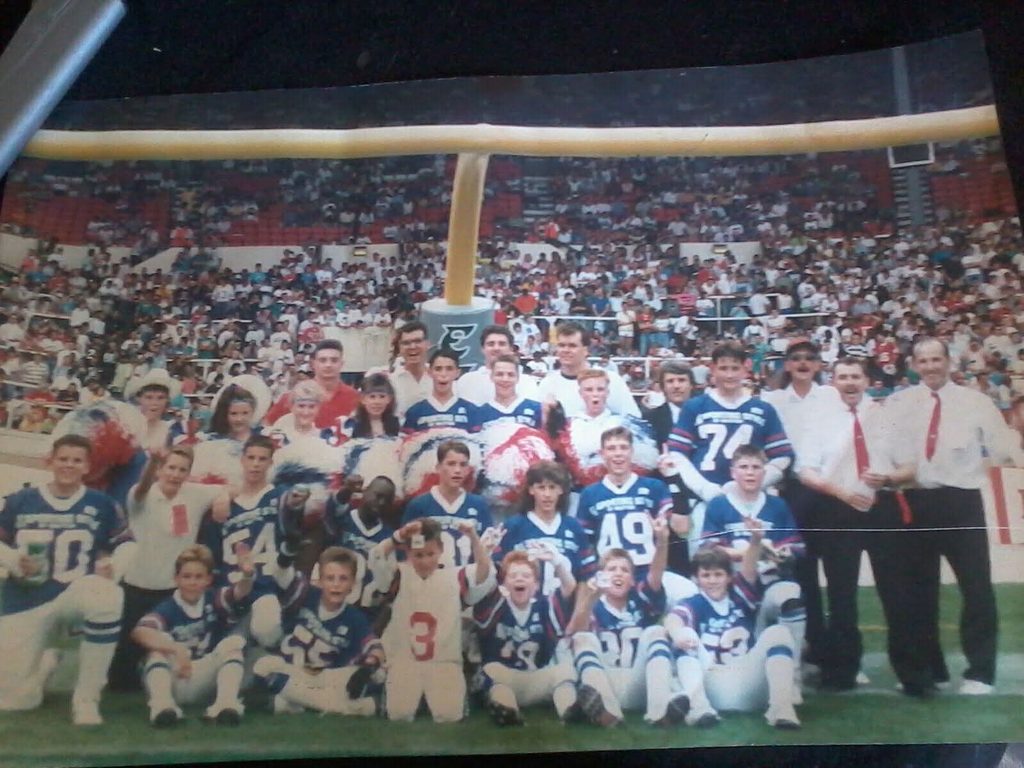
I started playing wide receiver soon after, switching from defence to offence when we needed receivers. Once the season started, I found I enjoyed receiver a lot more and felt it was my best position on the field.
We ended up winning the national championship in my first year, and a number of our players were picked to play in the North v South game at Wembley in July 1991. I can’t remember the score, but I know we came from behind to win, and I scored in that game. A funny story about that American Bowl — when I was in New England my rookie year, one of the veteran DBs, Otis Smith, started chatting to me one day during practice. He told me he’d been to London before, and it turned out he was a rookie in 1991 playing for the Eagles, who faced the Bills at Wembley. I’d played in the North v South game before that match, so we both got a kick out of that. Small world.
What were your first impressions of the sport in the UK at that time — the facilities, coaching, and standard of play?
I didn’t really have anything to compare it to, and I was just happy to be playing football. Our head coach, Wesley Peppiat, had played at a decent level and seemed to know his stuff, so I learned a lot from him early on. He was a big influence — he taught me how to play, trusted me to make plays in games, and had a positive approach. He didn’t shout for the sake of shouting, but he didn’t take any nonsense either. He was a tough coach in the right ways.
Who were the key people (coaches, teammates, organisers) who had the biggest influence on you during your Jets days?
There were a lot of people who played a massive role in the early days of my career. My mum and stepdad, of course, for driving me to practices and games. I remember names like Dave Smith, who was the dad of one of my good friends and teammates, Carl — and I think Carl’s mum was also very involved. The Purdy family, too — both parents involved, with two brothers playing and their sister as a cheerleader.
I actually spoke to one of my old Jets teammates, Tom “Ewok” Shaw, a couple of weeks ago. He lives in Colorado now, and my son plays in goal for Texoma FC in USL1. They had an away game in Colorado, and it turned out Tom knows my son’s head coach. They didn’t manage to meet up this time, but maybe next time.
I could list off all the names from our team back in those days — they were all great — and I have so many good memories. I tell the kids I help coach now with the Saints U16s about the fun we had, especially winning the national championship and playing at Wembley. I wanted them to have those kinds of memories going into their own playoffs this year.
What position(s) did you play back then, and do you remember your first ever touchdown or big play?
I played WR, DB, and returned kicks, so there were a fair few big plays. I can’t remember all of them, but I think the national championship game and Wembley stand out. We won the national championship 6–0, and I’m pretty sure I scored in that one. At Wembley, we were behind and I scored to help us come back to win.
Wembley experience
You played at Wembley Stadium during the NFL events — can you recall which games you were part of, and what it felt like to step onto that pitch?
I’ve already mentioned Wembley, but I remember the pitch seeming smaller than I thought it would be. It was pretty nuts being on the field, thinking about the players who had been there before in all sports. I can’t remember much about the crowd or noise, but I do remember being on the big screen right when I was tidying my hair. My teammates roasted me for that, and I never lived it down.
Transition to the U.S.
When you moved to Florida at 15, how prepared did you feel when you went to high school, and were they surprised you had played before in the UK?
I don’t really remember exactly how I felt, but I hadn’t played much kitted football and I don’t recall feeling underconfident. I was fairly sure I could hang with anyone my age. The playbook wasn’t an issue because Wes had already taught me a lot at the Jets, but I did need to work on how I ran and lowering my pad level.
One of my high school coaches set up two linebackers between cones and made me run them over again and again until I figured out how to get low and accelerate through contact. My dad was a massive help as well — he taught me how to lift weights and train properly from the start.
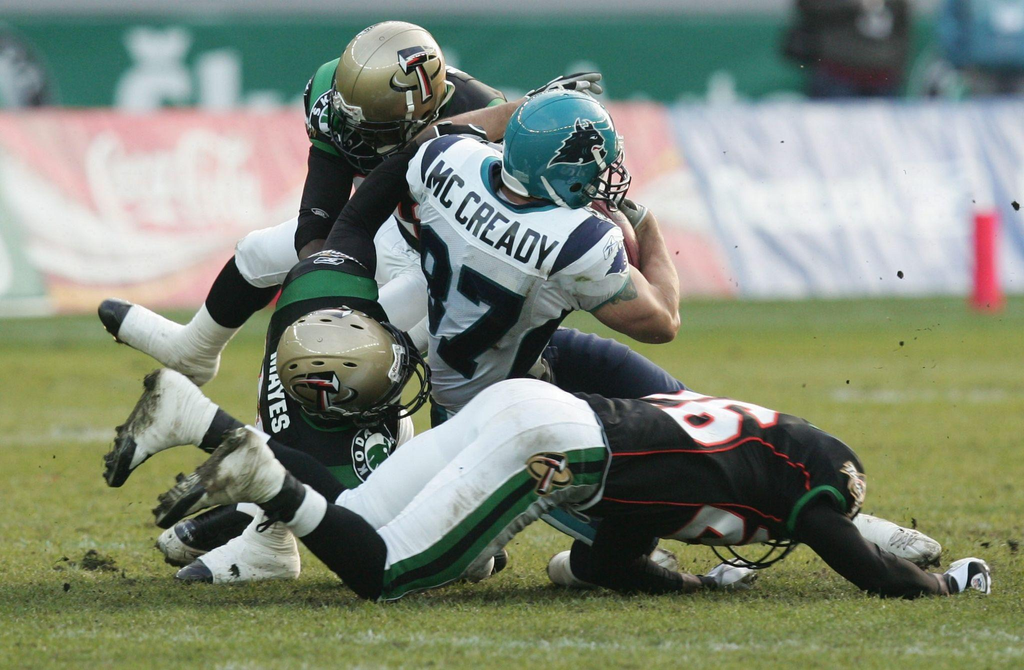
College career and NFL journey
What moment at USF made you realise the NFL might actually be within reach?
I always wanted to play in the NFL, but I don’t really remember focusing on it much during college because there were plenty of bumps in the road. At USF, I tore my ACL in my sophomore year — just after I’d earned a starting spot. It happened in practice, running a route, no contact at all. That was my first serious injury that required surgery.
I got a medical redshirt, which gave me one more year of eligibility. After my senior season I started training for my pro day in January. Doug Graber, the commentator for all our USF games, got hired as head coach for the Frankfurt Galaxy in NFL Europe, and he told me he wanted to take me there. I’d been talking to NFL Europe about the national player program, but after a really good pro day and signing with a good agent, I decided I was going to go for the NFL instead and skip NFL Europe that year.
When you joined the Patriots practice squad, what was that first week like — walking into the building, meeting the players, adjusting to the level?
When I went to New England for rookie minicamp, I was as nervous as I’ve ever been. But I also felt like I belonged. I had a really good three days of practice. The most surreal part was just holding the helmet in my hands, looking at the Patriots decal, and thinking, “This is my NFL helmet.” That was the number one thing I dreamt of as a kid.
After minicamp, my agent called to tell me how proud he was. The Pats hadn’t been sure about me at first, but I’d surprised and impressed them, which felt great. I ended up getting released later, but when Drew Bledsoe got hurt and Tom Brady took over, they brought me back. The place was electric. My locker was next to Terry Glenn’s, with Drew on the other side. I’d stay after practice catching extra balls with Terry and Drew, thinking, “This is crazy — this is my life right now.”
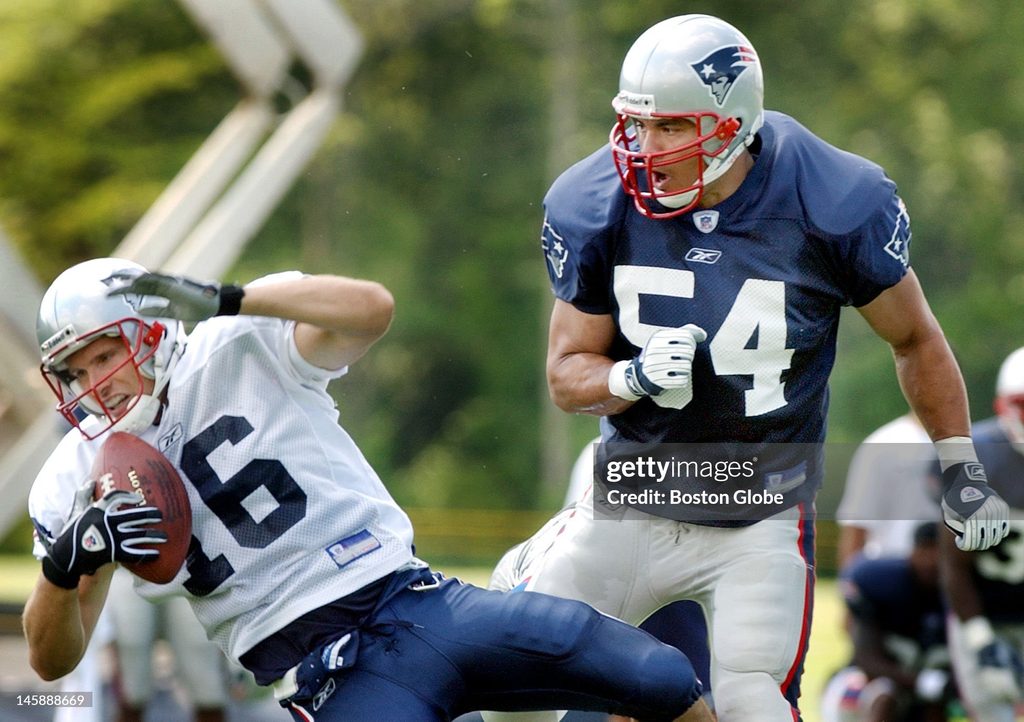
One of my favourite memories from that season came when we played the Rams late in the year. Joe Theismann, who was calling Sunday Night Football, came out to practice. The coaches gave him a helmet and jersey and let him run the scout team, so I got to catch passes — including a couple of touchdowns — from my boyhood hero. They don’t count in the stats, but to me, that’s as close as I could get to playing with him.
How did it feel to be the first non-kicking English player in the NFL? Did you feel a sense of representing UK football?
Absolutely. I knew it was something no one had done before, and I was proud to be representing where I came from. I always thought about the journey that started back at the Heathrow Jets — I wouldn’t have been there without them.
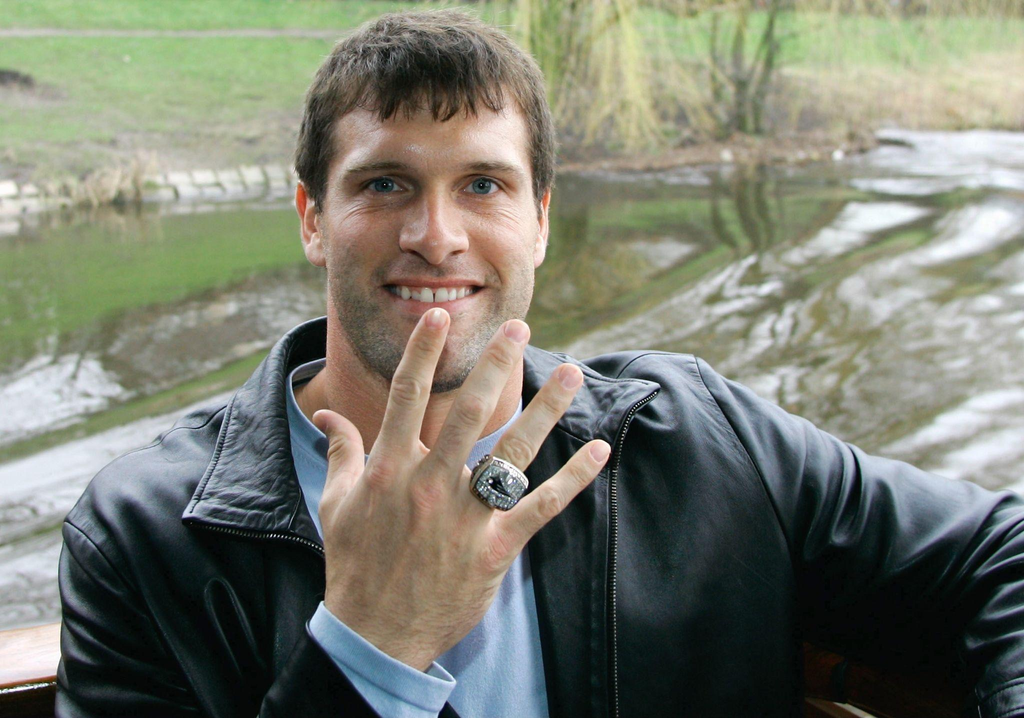
Super Bowl XXXVI
What stands out most in your memory from that Super Bowl week?
Honestly, the whole week was incredible. We stayed right off Bourbon Street in New Orleans, went out for dinners, bumped into ESPN crews — it was surreal. Getting through the hotel lobby was an adventure because it was always packed with fans.
We’d played the Rams towards the end of the season and lost by only a small margin, so we felt good about our chances. I remember in practice one day I didn’t tape my ankles — and of course, I rolled one. It was fine, but Bill Belichick saw I hadn’t taped them and absolutely ripped into me. I can laugh about it now.
During the game, when the Rams scored late to tie it, I looked at the clock and thought, “They’ve given Tom too much time.” Sure enough, he drove us down the field and Adam Vinatieri nailed the game-winner. I knew he wouldn’t miss — he was just so clutch.
What did you take away from being part of a championship organisation like the Patriots that you still value today?
The thing that stood out most was that every single player was valued equally. Whether it was Ty Law or a practice squad guy like me, we were all expected to give everything. My job was to give the starters the best possible look in practice, and the veterans appreciated that.
Belichick was all about accountability, focusing only on the next game, and never getting on SportsCenter for the wrong reasons. The biggest lesson I learned there was that you can achieve anything if you truly believe you can — but you have to earn it. You can’t just outwork your opponent once; you have to do it every day.
I tell the kids I coach now about Tom Brady — he was always the first in the building and the last to leave. He trained and prepared like it was the Super Bowl every single day.
Reflections
Looking back now, what role did your British youth football experience play in getting you to where you did?
It played a huge role. I learned so many fundamentals at the Jets, from play-calling to understanding playbooks, and I never felt behind when I got to Florida. My Super Bowl ring is as much for them as it is for me — they set me on my journey fully equipped and ready to go.
What advice would you give to a young player in the UK today who dreams of playing in the U.S. or even the NFL?
Listen to people who’ve been there or who know more than you. Be early to practice, get your reps in, and move with purpose. Practice like it’s a game, because habits carry over. Refuse to be outworked by anyone.
I used to visualise my opponent when I was tired or wanted to skip that last rep. I’d imagine them working harder than me, and that pushed me to do more. Never let anyone be the author of your story. I told people I’d play in the NFL when I was a kid living in England, and they laughed — but I became the first non-kicking Brit in the NFL and the first to win a Super Bowl.
Today, there are so many more opportunities — the NFL Academy, national practice squad spots, international player pathways. If you want it, it’s there for the taking.
One of my favourite quotes is from J.J. Watt: “Success isn’t owned, it’s leased. And rent is due every day.” That’s how you have to approach it.