
From Holywell Hero to Wheelchair Football Pioneer: The Gee Griffiths Story
From throwing a cheap football around a North Wales school field in the 1980s to helping develop a new form of American football attracting international interest, Geraint “Gee” Griffiths has spent more than four decades finding his place in the sport — and helping others find theirs.
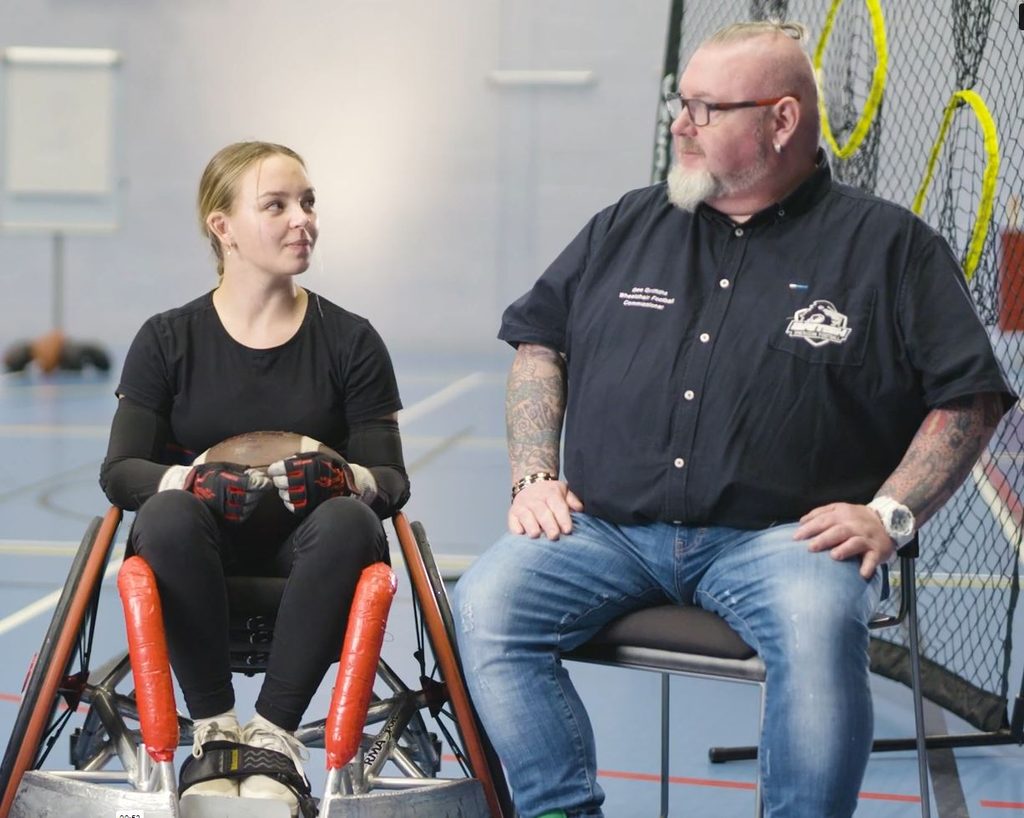
For Gee Griffiths, it started in much the same way as it did for thousands of British fans of his generation: Channel 4.
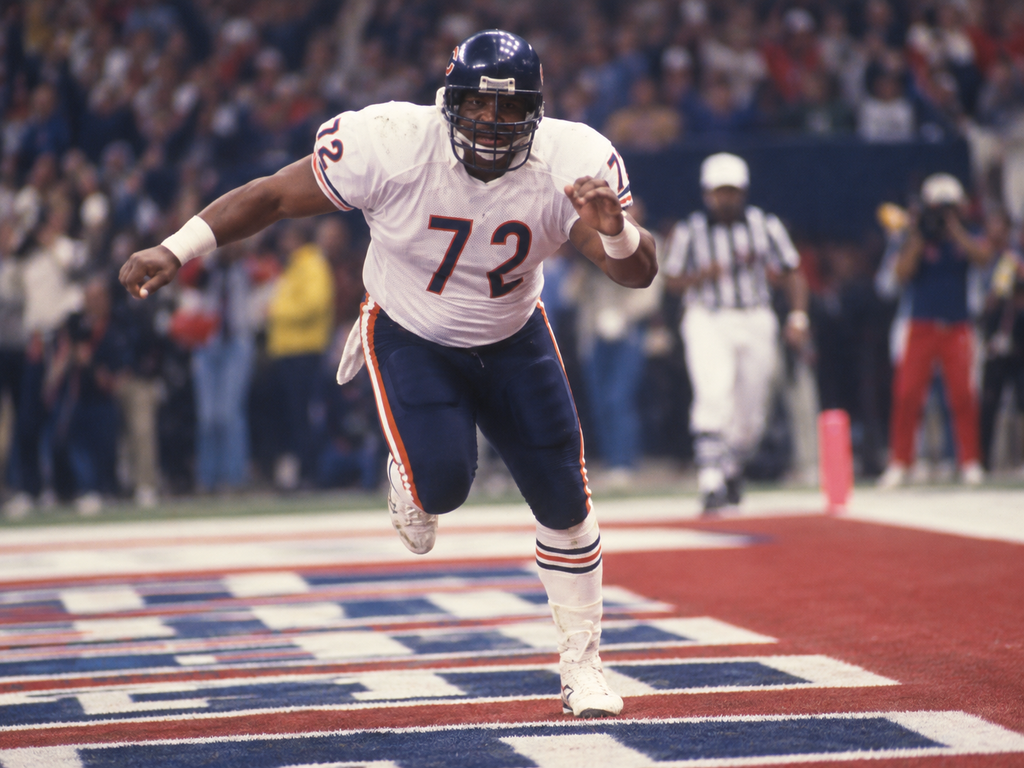
Around 1984, aged 12, he discovered American football on television. Traditional British sports had never particularly appealed to him, but one NFL player would change his perception of what an athlete could look like.
William “The Refrigerator” Perry became an instant hero.
Watching the 300-plus-pound Chicago Bears defensive lineman in the mid-1980s showed the young Griffiths that there could be a place in sport for someone built like him.
“It suddenly dawned on me — even the fat guys can play!”
From that moment, simply watching American football wasn’t enough. Gee wanted to play it.
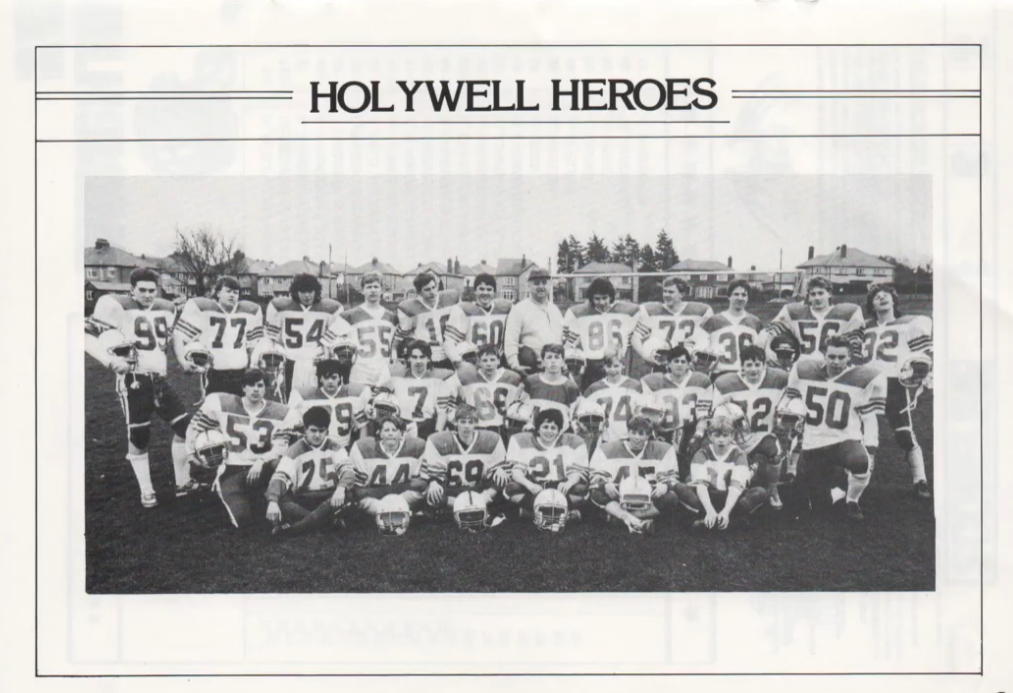
The Holywell Heroes
There was one considerable problem with deciding you wanted to play American football in North Wales in the mid-1980s: there weren’t exactly clubs on every corner.
So Gee and his friends created their own opportunity.
On the playing field at Carmel School, near Holywell, Gee, Neil Jones, Steven Chowdry, Craig Hughes and Lee Hughes began trying to recreate what they had been watching on television.
Initially, there was little more to it than a group of friends and a cheap football.
But it grew.
Neil Jones’ father, himself a follower of the sport, began putting together a more organised club. What started as friends throwing a football around became the Holywell Heroes.
Training moved to the top playing field at Holywell High School on Sunday mornings. Players began travelling from Liverpool, Manchester and elsewhere across the North West to join them.
An American from Chicago became the team’s first head coach, although Gee can no longer remember his name.
In an era before online coaching videos, digital playbooks or instant access to American football knowledge, everyone was learning together.
“We basically copied what we saw on TV,” Gee recalls.
Rugby tackle bags and shields were eventually introduced, along with the occasional martial arts pad. Former rugby coaches became involved, and their American head coach helped teach both players and other coaches.
Training itself was rather less glamorous: laps of the field, star jumps, squats and plenty of neck and shoulder exercises.
“God, I hated those laps,” Gee remembers.
The club’s name would change over the years. Gee remembers the team beginning as the Holywell Heroes, with the Flintshire Heroes name also used before the club became known as the Delyn Valley Heroes.
It was under that latter name that the club would eventually reach the 1988 British Youth American Football Association championship final.
For Gee, though, the people matter more than the name.
Those childhood friends had gone from watching American football on television to becoming part of Britain’s developing youth football scene.
There were painful memories too.
Quarterback Steven Chowdry suffered a horrific broken arm after being sacked during training, an injury which ended his playing days.
There was no protected red jersey for the quarterback in those days.
As more clubs appeared around the country, some of the players who had previously travelled considerable distances to Holywell inevitably found teams closer to home. But the Heroes continued recruiting locally and remained competitive.
Number 66
Inspired by Perry, Gee initially played defensive tackle — or nose tackle, as he remembers it being known within the team — before also moving onto the offensive line as a reserve centre and tackle.
His number was 66.
Remarkably, decades later he discovered that 66 had also been William Perry’s college number.
Gee eventually wrote to his childhood hero and explained the influence Perry had had on his life.
Perry responded by finding an old photograph of himself wearing number 66, signing it and sending it to Britain along with a personal letter.
For someone whose football journey had effectively begun because of Perry, it brought things full circle.
Into the kit — and into British football history
As the Heroes became more organised off the field, sponsorship followed.
Local company Nice-Pak International became an early sponsor. The team received fresh white shirts with blue numbers, blue pants and full-length white socks.
More importantly, proper football equipment was beginning to arrive.
Neil’s father travelled to the United States and shipped back shoulder pads and helmets.
Being close friends with Neil had its advantages: Gee was among those who got an early look at the new equipment and chose a MaxPro helmet with an enormous facemask, largely because he thought it looked “cool” and “nasty”.
For young British players who had previously improvised much of their equipment, putting on proper pads and helmets transformed the experience.
Then came Steel City.
The Heroes were smaller in numbers, but Gee vividly remembers standing on the sideline in their new kit feeling ten feet tall.
Inside, however, he was nervous.
What none of them appreciated was the historical significance of what they were doing.
Only decades later did Gee really begin to comprehend that these youngsters were participating in the formative days of full-contact youth American football in Britain.
“At no time did the realisation hit us that we were making British history,” he says. “Now, nearly 40 years later, all these memories and realisations hit me.”
The road to Leicester
The 1988 season remains one of Gee’s favourites.
By then, the team was competing as the Delyn Valley Heroes, travelling around the country to face opponents including Redditch, Birmingham and Merseyside.
The Heroes finished the regular season with an impressive 6–1 record, scoring 241 points and conceding just 89.
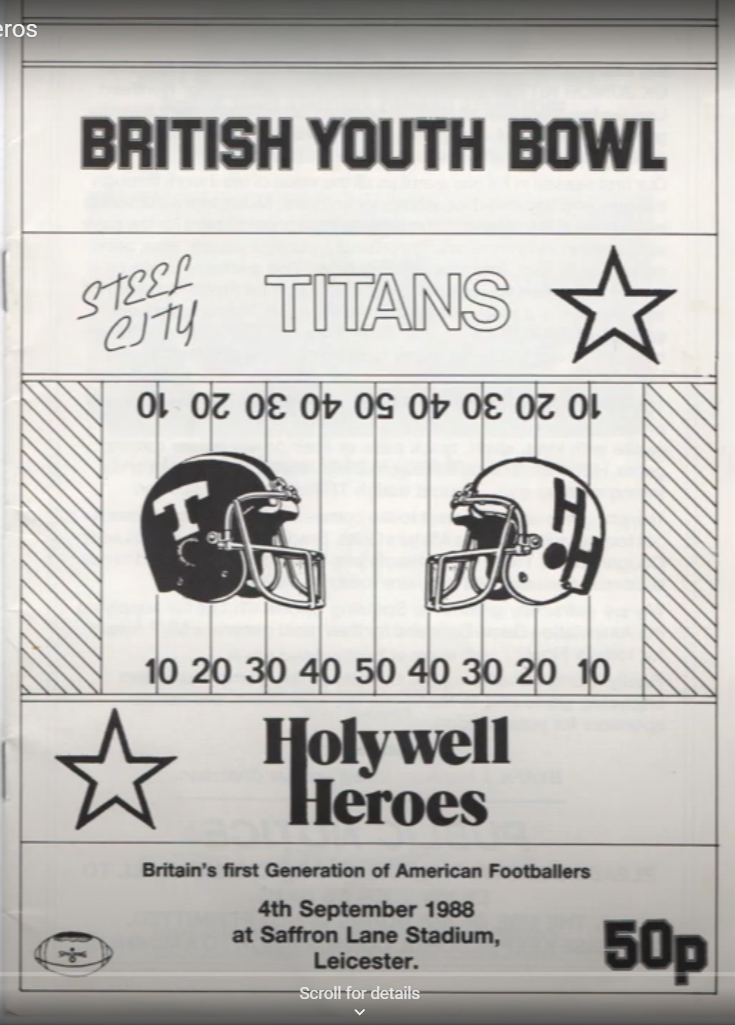
Their performances earned them a place in the BYAFA Kitted Championship final against the Steel City Titans.
The game took place on 4 September 1988 at Saffron Lane in Leicester.
For Gee, one of the strongest memories isn’t even a play.
It is the pitch.
The youngsters encountered a surface unlike the grass pitches they had become used to.
This wasn’t grass. This was AstroTurf — the sort of surface they had seen NFL teams playing on television.
Unfortunately, they were wearing rugby boots.
As the Heroes ran out to warm up, Gee and several teammates promptly discovered what happened when long metal studs met the unfamiliar artificial surface.
They fell over.
“Out we ran, and I, as well as others, went flat on our faces.”
It was embarrassing, but the surroundings made an impression.
They were playing in a stadium, in a national championship final, in front of spectators watching a sport which only a few years earlier they had struggled to find anywhere in Britain.
Steel City ultimately won the championship game 26–18.
Gee’s recollection of the match itself is simple.
“It was a hard game. We played well, but not as well as our opponents.”
For the Delyn Valley Heroes, it was the culmination of a remarkable journey from a handful of youngsters throwing a cheap football around a school field.
And for Gee, the experience would stay with him long after his playing days were over.
Becoming a Roman
After the 1988 season, the Heroes began losing more players as new clubs appeared closer to home.
Gee eventually followed.
In 1990 he joined the Chester Romans, training at Westminster Park — a club which, importantly, even had proper American football goalposts.
He kept number 66 and became the reserve centre behind Mike Needham while seeing more playing time at tackle.
Compared with the Heroes, the Romans felt enormous: a bigger playing squad, more coaches, a substantial off-field organisation and even cheerleaders.
“How American!” Gee jokes.
He spent three seasons with Chester before weekend work and adult responsibilities brought his playing career to an end.
Among his memories from those years was facing the touring Michigan All Stars, an American team which visited Britain.
Chester didn’t beat them, but Gee remembers the Romans competing hard and managing to put points on the board.
The club was also already looking beyond its own games.
During one summer, Romans players were sent into schools around the region to introduce youngsters to non-kitted touch football.
Gee worked with Flint High School, coaching pupils twice a week before the programme culminated in a tournament.
Flint won it.
It was an early experience of introducing American football to people who might otherwise never have had the opportunity to play.
Years later, that idea would become an increasingly important part of Gee’s involvement in the game.
Football finds him again
For many years, that appeared to be the end of Gee’s active involvement in American football.
Then came 2008.
Unable to work because of long-term illness, he decided to look up his old club and attend a Chester Romans game.
The Romans had moved from Westminster Park to the Cheshire County Sports Club in Upton, but there was a familiar face on the sideline.
Mike Needham recognised him immediately.
Gee started watching games. Then he started attending training. Soon he was helping set up equipment and filming sessions for the coaching staff.
Within months he had been asked whether he would consider becoming General Manager.
He accepted.
What might have been a voluntary role became something far more important.
After being permanently signed off from his career in the Prison Service, Gee says he had been in a very difficult place personally.
Football gave him purpose again.
“Now I had the light I needed. I had the love of football back in my life.”
Four years later, when the club’s head coach returned to America and the chairman also left, Gee was asked to take over as Chairman of the Chester Romans.
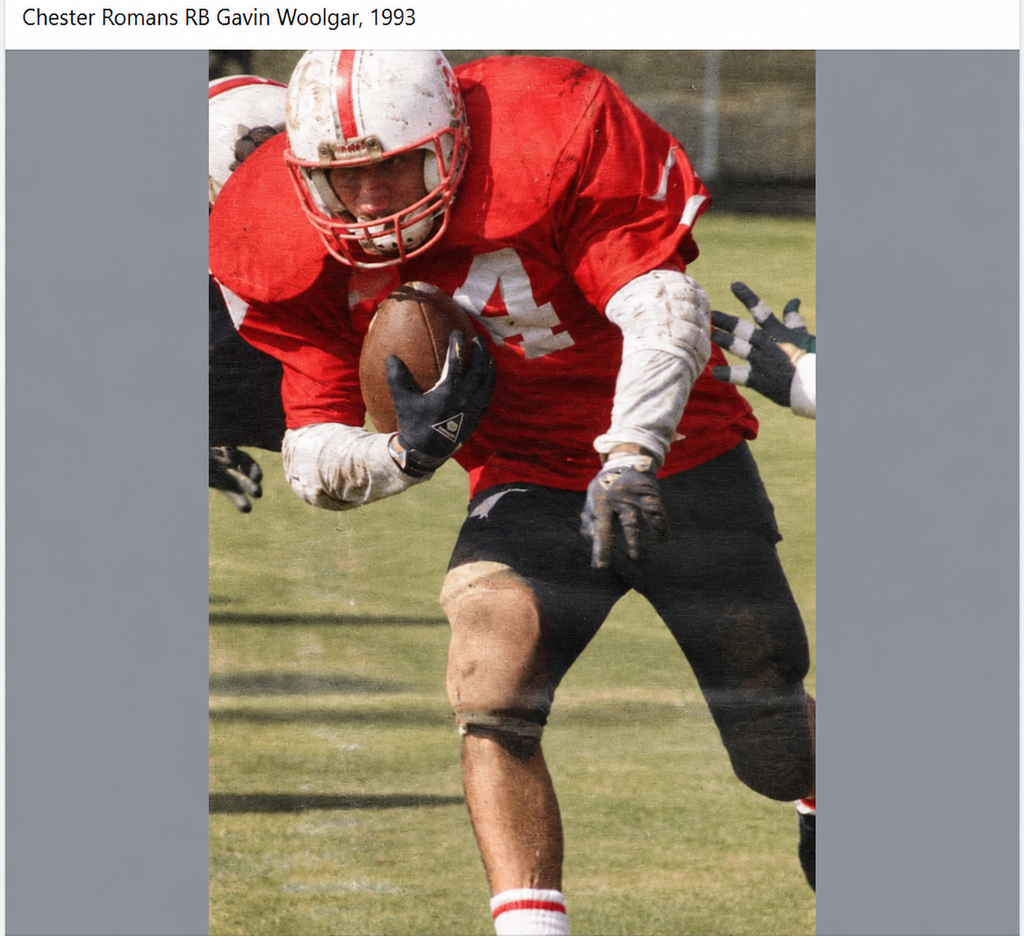
For someone who had joined the club as a young lineman, it was an enormous honour.
He eventually stood down after two years to concentrate on his growing responsibilities with BAFA.
Once again, American football had changed the direction of his life.
Raider Nation
Alongside playing and working within British American football, Gee had developed a lifelong NFL allegiance.
Although players such as William Perry, Walter Payton, Dan Marino and Joe Montana initially captured his imagination, one organisation stood apart.
The Raiders.
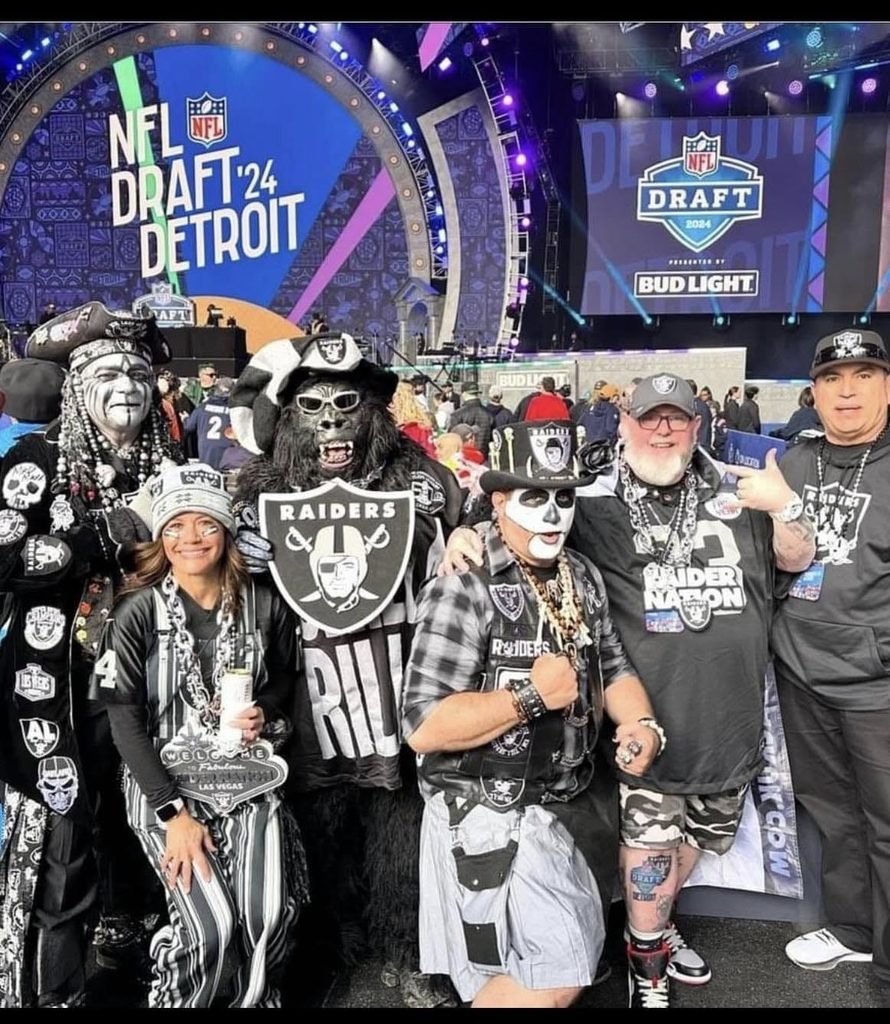
The silver and black. John Madden. The intensity. The infamous reputation. The Black Hole.
“Raider Nation for life,” as Gee puts it.
That relationship eventually produced another extraordinary moment when he was selected to represent the Las Vegas Raiders as an NFL International Fan of the Year.
He travelled to Detroit for the 2024 NFL Draft, where his experience included the opportunity to take part in announcing Raiders draft selections.
For a British kid who had discovered the NFL through Channel 4 four decades earlier, standing on an NFL Draft stage was difficult to comprehend.
His International Fan of the Year experience also brought him into another area of the game which would become central to his life: wheelchair American football.
“Why can’t people play American football from a chair?”
The idea had first arrived almost by accident.
Gee was waiting for his daughter when he saw members of a local wheelchair basketball team leaving a training session.
He began thinking.
Had anyone tried playing American football in wheelchairs?
He went home and started researching.
There was a version being developed in the United States by Move United, and Gee made contact with the people behind it.
But the American model was designed around enormous playing areas, often using car parks or large exhibition centres, with NFL-affiliated teams, significant budgets and many elite athletes.
Gee wanted something different.
When Covid brought much of the world to a standstill, he began working.
His objective was to devise a version which wasn’t restricted to elite wheelchair athletes — something suitable for people who might never previously have played American football, or perhaps had never even watched it.
It needed to be safe, accessible and sustainable.
The answer was to shrink the field.
Instead of requiring something approaching an American football field, Gee’s game would fit on a basketball court.
Basketball courts could be found almost anywhere in the world. Indoor sports halls also provided safer playing surfaces than tarmac, while the reduced dimensions encouraged both running and passing rather than allowing the game to become dominated by long throws.
With support from Move United, BAFA’s Chris Townsend and Pete Ackerley, Gee began formalising the rules.
He subsequently worked with Jim Briggs and football rules specialists before taking the game into universities and turning the written concept into something people could actually play.
There were adjustments along the way.
But it worked.
Gee had gone from wondering whether American football could be played from a wheelchair to developing a version of the sport intended to open it up to an entirely new group of participants.
And it was beginning to attract attention beyond Britain.
Taking a British idea to the world
In 2024, Gee was invited to present Wheelchair American Football at an IFAF Congress in Switzerland.
Standing in front of representatives from around the world was understandably daunting.
His opening line helped.
“Wow, this isn’t scary.”
The room laughed.
By the end of the event, Gee says representatives from ten nations had requested information about the game and its rulebook.
The international interest has continued.
By September 2026, Gee was holding regular meetings with American Football Elite Development Nigeria about establishing the sport in Lagos and eventually expanding it elsewhere in Africa.
According to Gee, the first Wheelchair American Football exhibition game in Lagos took place on 10 September 2026, with plans for league competition to begin in February 2027.
For an idea which began with a simple question while waiting for his daughter, its development has exceeded anything he could have imagined.
More than a game
For all the international presentations and major events, some of the moments that have meant most to Gee have happened far away from stadiums.
At a disability event in Kent, he ran several “have-a-go” sessions where visitors could sit in a wheelchair and try throwing a ball into a quarterback target net.
Four women who worked in end-of-life care homes watched the activity.
They later bought four quarterback nets of their own.
Their idea wasn’t to create an American football team.
It was simply to use the activity with residents — throwing tennis balls, footballs, rugby balls, beanbags or anything else available — to encourage movement, interaction and happy memories.
Gee hadn’t anticipated anything like it.
“I actually had to take five minutes, and I cried.”
It was a reminder that the value of what he was helping develop could reach far beyond organised sport.
Another participant, Darcy, first met Gee at an NFL game at Wembley and became involved with the programme from its early stages.
He subsequently travelled to Chicago and played with the Chicago Bears Wheelchair Football Team, returning to Britain after winning a tournament with them.
Then came television.
Paramount approached Gee after discovering the programme and arranged to film Wheelchair American Football for Nickelodeon’s SlimeTime.
Initially Gee was told that the footage hadn’t made the seven-episode series.
Then the producer explained why.
They liked it too much to lose within a regular episode.
Instead, Wheelchair American Football became part of a Super Bowl special, which Gee recalls being broadcast several times over Super Bowl weekend.
For Gee, the significance of these experiences isn’t simply the recognition they bring.
It’s that more people are discovering something they might never have thought was possible.
What comes next?
Wheelchair American Football’s principal UK hub is currently in Birmingham, while Gee continues attending disability events around the country to promote the sport.
The next objective is to establish additional hubs in northern and southern England before eventually developing a competitive domestic league.
There are bigger ambitions too.
Gee is in discussions around a possible demonstration at the 2027 Invictus Games in Birmingham, while other potential avenues include the Special Olympics, World Ability Games and, ultimately, the Paralympic Games.
These remain ambitions rather than confirmed future events, but Gee is determined to explore what might be possible.
His philosophy is straightforward:
“Nothing is impossible. It just takes hard work and determination.”
Wheelchair football isn’t his only attempt to make the game more accessible.
Gee has also written a version of Walking American Football, based around flag football but without flag belts, designed to remove another potential barrier for participants, including people with intellectual disabilities.
His ambition is not necessarily that everyone plays the same form of American football.
It is that everyone should be able to find a form of American football they can play.
Forty years later
It is now more than four decades since a 12-year-old Gee Griffiths watched American football on Channel 4 and realised there might be a place in sport for him.
In that time he has watched British American football progress from improvised games on school playing fields to university leagues, women’s football, national teams, international competition, structured development pathways and flag football’s arrival on the Olympic programme.
His own journey has been almost as varied.
Holywell Hero.
Chester Roman.
Player.
General Manager.
Chairman.
BAFA administrator.
Raiders International Fan of the Year.
And now the driving force behind a version of American football which he hopes could provide opportunities for people around the world.
Football, he says, has changed his life more than once.
First, it showed the child who didn’t believe he belonged in sport that there was somewhere he fitted.
Years later, when illness had removed his career and left him struggling, returning to football gave him purpose again.
Now he is trying to make sure other people are given that same opportunity.
“I want to leave a legacy behind,” Gee says. “I want those opportunities to develop, thrive and encourage others to do something new.”
For someone whose journey began with a cheap football on a school field near Holywell, that legacy is already taking shape.
Britball History would like to thank Geraint “Gee” Griffiths for sharing his memories and experiences. This feature is based on his personal recollections, supplemented where possible by historical records.